
Health / Nutrition / Training
Walking After Meals: Does It Help Blood Sugar, Weight Loss, and Metabolic Health?
A short walk after a meal can help lower the rise in blood sugar compared with spending that time sitting. Studies have found benefits in people with type 2 diabetes, older adults at risk of impaired glucose regulation, and people without diabetes. You don't need to turn the walk into a workout to make it worthwhile. [1–5]
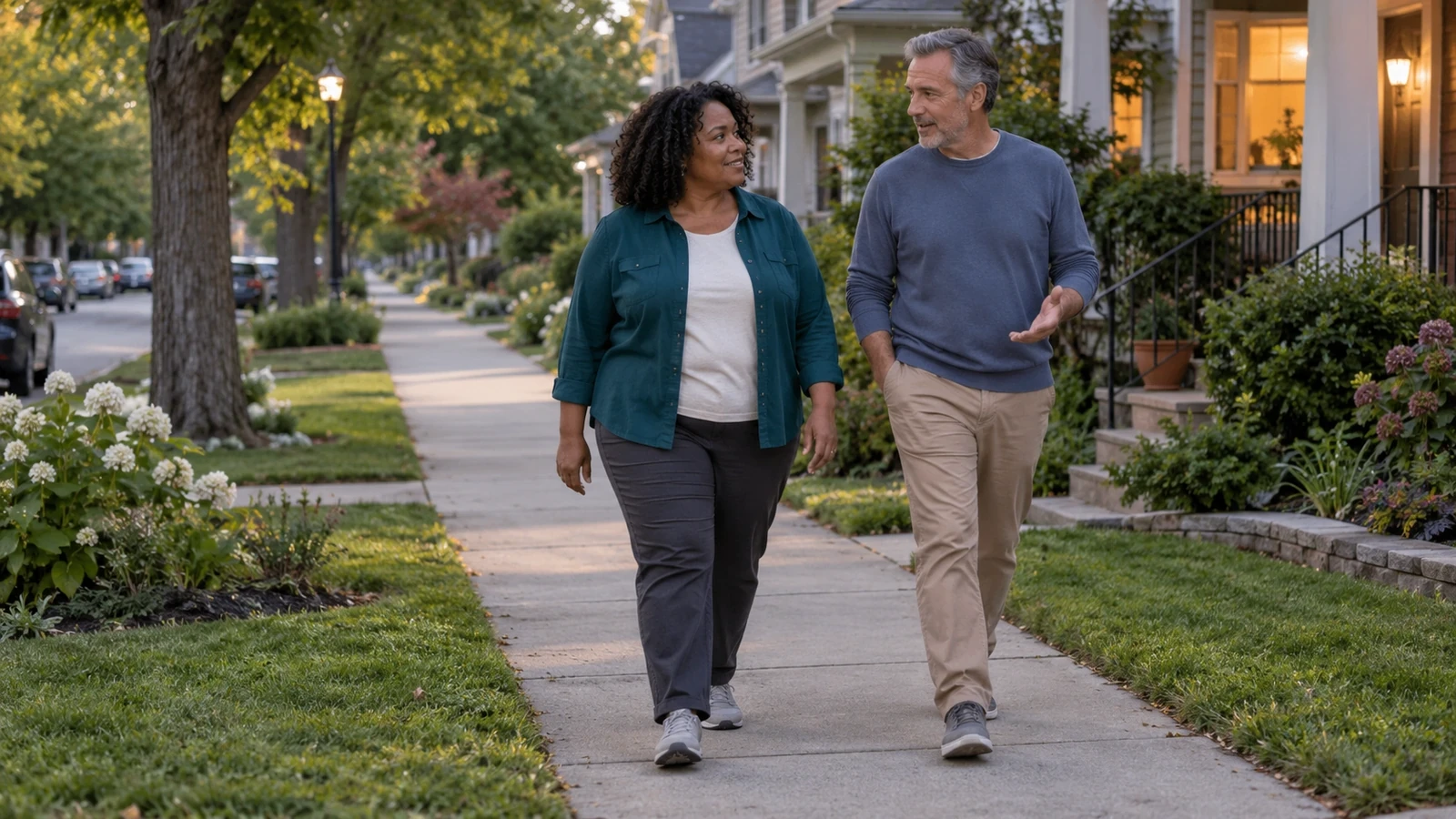
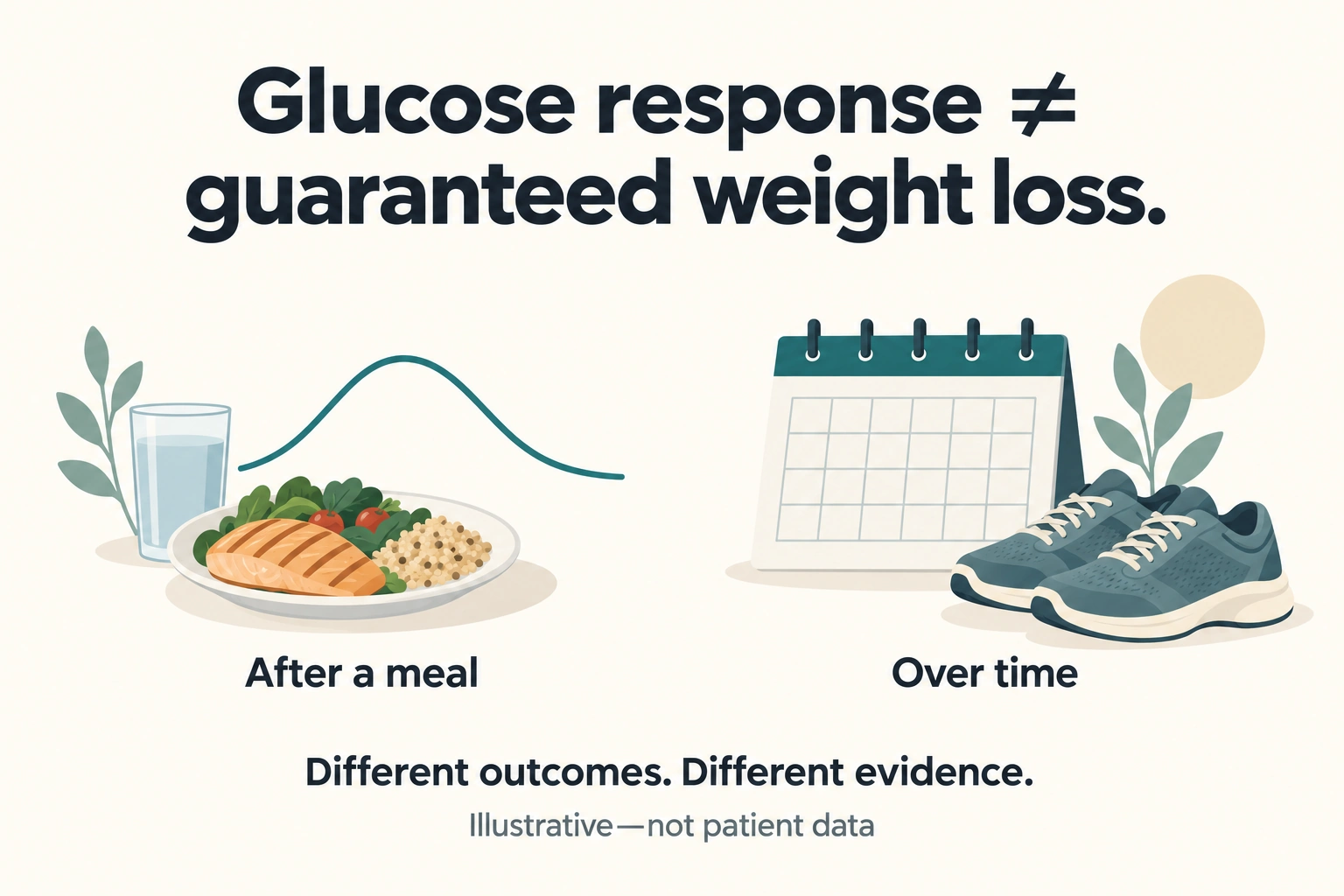
The strongest evidence concerns blood sugar over the next few hours. A better glucose response does not automatically mean weight loss, a lower long-term diabetes risk, or better health on every measure. Researchers also haven't identified one perfect starting time or walking duration that works for everyone. [7–9,19,32]
For a generally healthy adult who can walk comfortably, five or ten easy minutes after one convenient meal is a reasonable place to start. Those are practical options, not medical thresholds. This guide explains what the evidence supports, how to choose a routine that fits your day, and when medication or a health condition changes the advice.
Health note: This article is for general education. It does not replace an individualized activity, medication, or rehabilitation plan. Follow your clinician's advice when a medical condition, pregnancy, symptoms, or treatment affects what is appropriate for you.
What happens after a meal—and why walking can help
A rise in blood sugar is a normal part of eating
Your body breaks down digestible carbohydrates into smaller molecules, including glucose. Glucose then enters the bloodstream, where it becomes available as fuel. Insulin, a hormone made by the pancreas, helps coordinate how the body uses and stores that fuel. Blood sugar normally rises after a meal and then changes as nutrients are absorbed, used, and stored. [13,30]
That rise is not, by itself, evidence that a meal was unhealthy. The word “spike” can make ordinary physiology sound like an emergency. What matters clinically is the size, duration, and broader pattern of glucose changes, interpreted in the right context—not whether a line on a graph moves upward at all. [18,30]
With insulin resistance, muscle, fat, and liver cells respond less effectively to insulin. The pancreas may compensate by making more. When that compensation is no longer sufficient, blood glucose can remain elevated. Prediabetes and diabetes are assessed with appropriate clinical testing; neither a person's body size nor one reading after lunch establishes a diagnosis. [18,30]
A meal's effects also depend on more than its name. Two lunches can differ considerably in carbohydrate content, portion size, and overall composition. Medication, recent activity, and a person's glucose regulation add further variation. This is one reason the same walking routine does not produce an identical result for every person or every meal. [15,29]
Moving muscles use glucose through more than one pathway
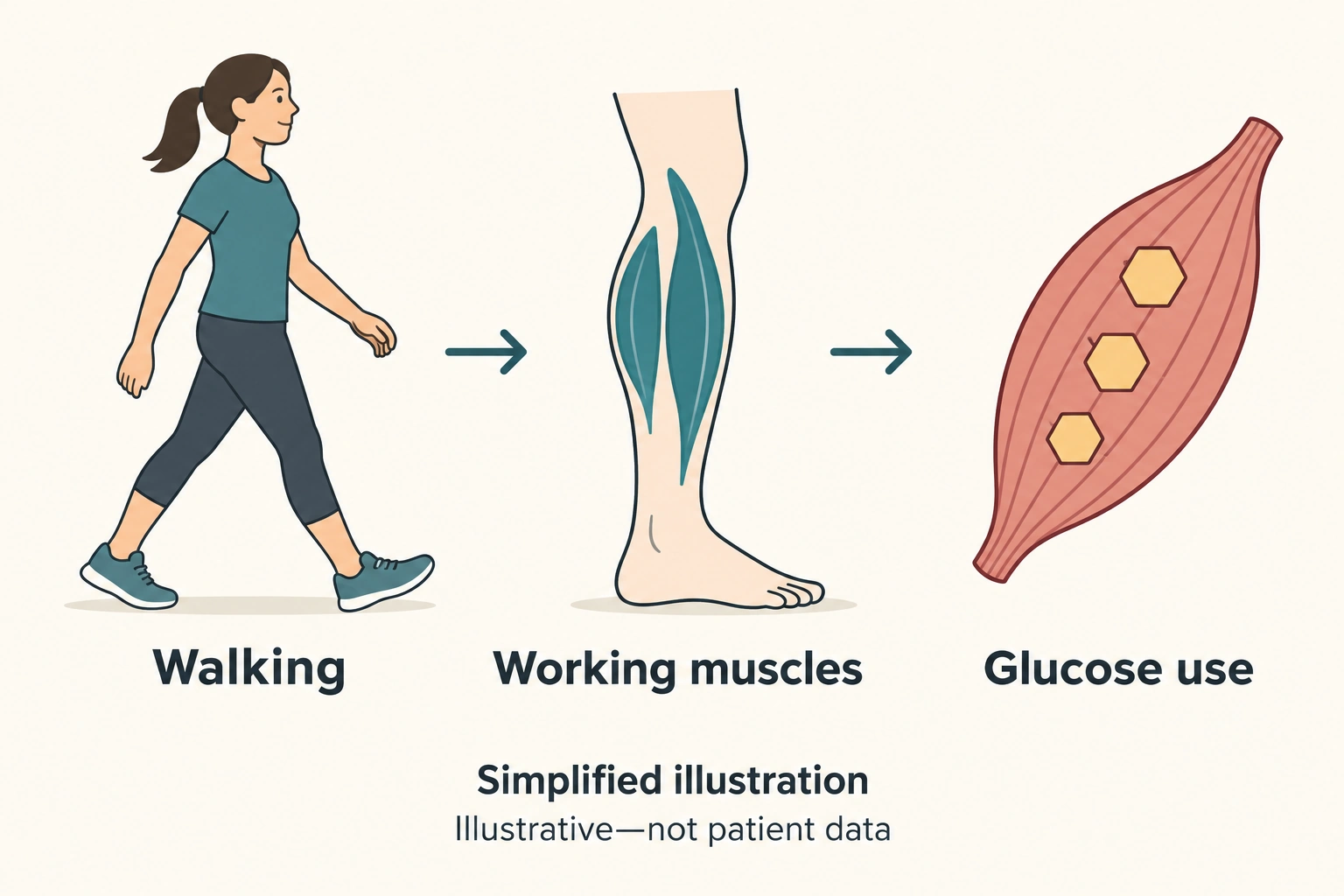
When your muscles contract, their demand for fuel increases. Contraction activates processes that help glucose move from the bloodstream into muscle cells, partly through signaling pathways distinct from those used by insulin. Blood flow, glucose transport proteins, and processes inside the cell all contribute. [13]
Walking after eating puts those working muscles to use while nutrients from the meal are entering circulation. That provides a plausible explanation for the benefits observed in human studies. It doesn't mean walking switches insulin off, prevents all glucose rises, or burns only the food you just ate. Muscles use multiple fuels, and the liver continues to help regulate circulating glucose. [13,15,29]
The distinction between a plausible mechanism and a demonstrated outcome is important. Knowing how contraction affects glucose uptake helps explain why walking might work. It cannot tell us that ten minutes is the ideal dose, that a faster pace is always better, or that the habit will cause a particular amount of weight loss. Those questions require studies that actually measure those outcomes. [1,19]
What researchers measure on a glucose curve
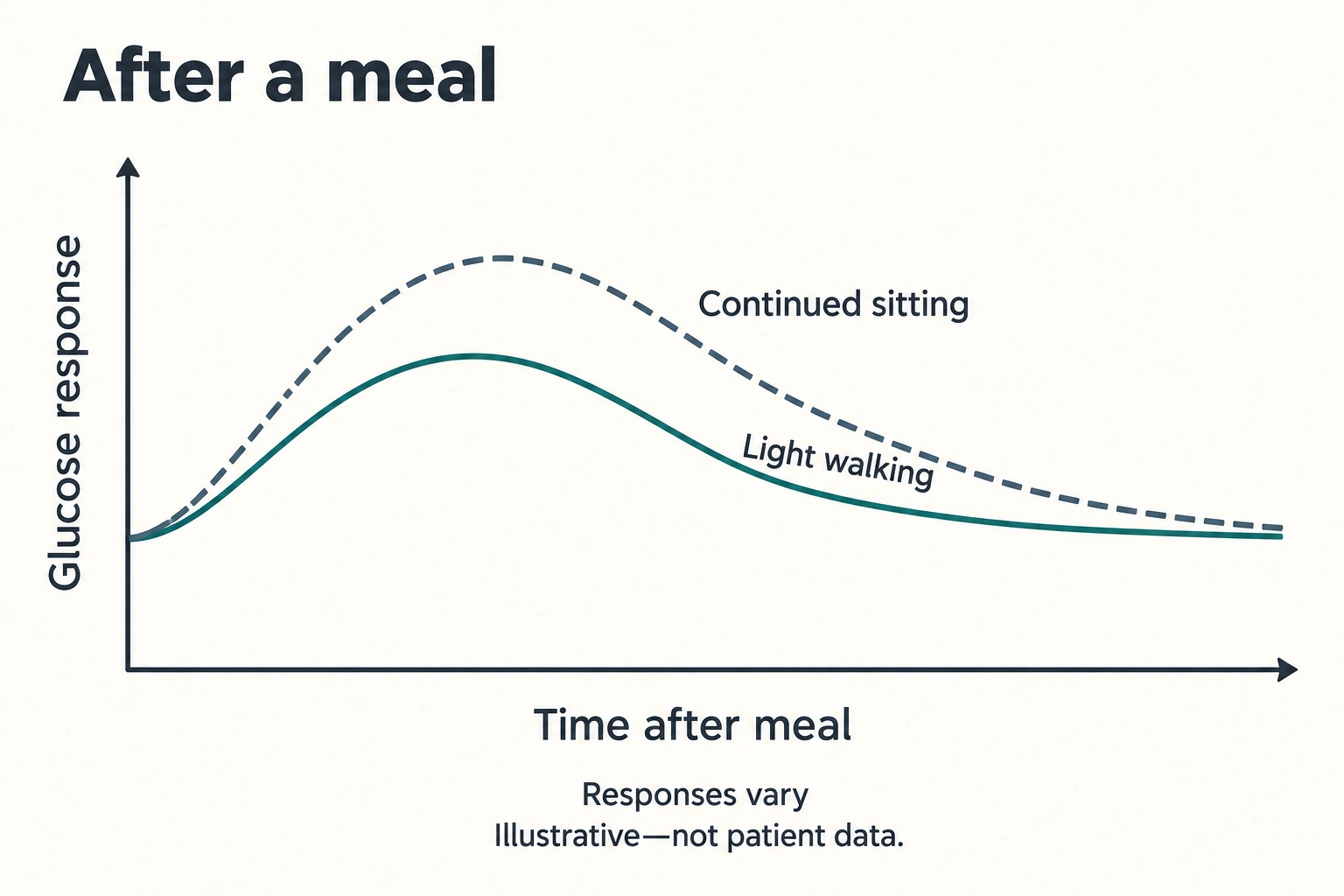
A study can describe several different aspects of the same glucose response. The peak is the highest measured level. Area under the curve, usually shortened to AUC, summarizes glucose levels across a specified period. Incremental area under the curve, or iAUC, describes the response relative to the starting level; the exact calculation depends on the study. [1,5]
These measures aren't interchangeable. A walk might lower the highest point without changing the total response very much. It might instead help glucose return toward its starting level sooner. A result measured at one time point can also look favorable even when the overall four-hour response is not significantly different. [5,11]
Longer-term measures answer another question. Hemoglobin A1c, also called HbA1c or A1C, reflects average glucose over roughly three months. A lower reading after today's walk does not show that A1C has already improved. Nor does it tell us whether the person has lost body fat or reduced their risk of a future heart attack. [18,19,32]
You don't need to become an expert in these measurements to use the research. Just keep one question in mind when reading a headline: What improved, compared with what, and over how long? That question separates a useful finding from an exaggerated promise.
What the walking research actually shows
Across the research, the clearest comparison is walking versus continued sitting. Replacing some sedentary time with walking often improves the glucose response after eating. The evidence is less decisive about which walking schedule is best or how much timing walks around meals adds to the benefits of being active in general. [1,8,32]
Ten minutes after meals: a useful study with an important qualification
In a randomized crossover study published in 2016, 41 adults with type 2 diabetes followed two walking recommendations, each for two weeks. One was to walk for 30 minutes a day without specifying the time. The other was to walk for ten minutes after each main meal. Each participant tried both approaches. [2]
The post-meal recommendation produced an approximately 12% lower three-hour incremental glucose response, averaged across meals. The ratio between conditions was 0.88, with a 95% confidence interval of 0.78–0.99. That is a specific research result—not a promise that anyone's blood sugar, A1C, or diabetes risk will fall by 12%. [2]
Although the prescribed walking time was equal, participants were more active overall during the post-meal period. The advantage therefore cannot be attributed to timing alone. The study supports the usefulness of the recommendation as people actually followed it, while leaving open how much of the benefit came from timing versus additional activity. [2]
Three short walks can work, but one longer walk can work too
A 2013 experiment studied ten inactive older adults at risk of impaired glucose tolerance. Participants completed controlled testing periods involving three 15-minute walks after meals, a continuous 45-minute morning walk, or a continuous 45-minute afternoon walk. [3]
Both the post-meal schedule and the morning walk improved 24-hour glucose control compared with the corresponding inactive conditions. The post-meal schedule was particularly helpful after dinner. This was a small, closely supervised experiment, not proof that three walks always beat one. [3]
That finding matters because the practical choice is often between two useful activities, not between an ideal routine and doing nothing. Someone who already enjoys a longer morning walk doesn't need to abandon it to follow a meal-based schedule.
What the two-minute studies really tested
In a well-known 2012 laboratory trial, 19 adults with overweight or obesity who did not have diabetes interrupted sitting with two minutes of walking every 20 minutes. Researchers measured the response for five hours after a drink containing glucose and fat. Both light and moderate walking improved glucose and insulin responses compared with uninterrupted sitting. [4]
The repeated breaks are central to the finding. One two-minute lap around the kitchen is not the same intervention as getting up repeatedly throughout an afternoon. A brief walk can still be a sensible first step, but this trial cannot tell you the isolated effect of that one walk.
A related trial in 24 adults with type 2 diabetes tested three-minute walking breaks or simple resistance activities every 30 minutes during an eight-hour laboratory condition. Both improved the measured glucose response. The resistance exercises were a separate intervention; the result doesn't establish that standing still or any seated movement produces the same effect. [12]
Newer reviews support the overall pattern, not a perfect formula
A review published online in August 2026 analyzed short bouts of accumulated exercise across 29 independent groups of participants, totaling 573 people. It found an overall improvement in post-meal glucose compared with sedentary conditions. However, the interventions involved accumulated activity, not necessarily one walk after one meal. Observations about particular schedules were exploratory rather than proof of an optimal protocol. [8]
Another 2026 review examined 17 crossover studies using continuous glucose monitoring in people with type 2 diabetes. It found improvements in several glucose outcomes, but it included different forms of exercise and both randomized and nonrandomized studies. Differences between its timing subgroups were not statistically significant. [9]
Taken together, these reviews strengthen the case for moving instead of sitting. They don't justify telling every reader to start at exactly the same minute or to complete the same number of steps.
Not every glucose measure improves
A 2009 study of 12 people with type 2 diabetes found a favorable result at one measurement after a post-dinner walk, but no significant difference in total four-hour glucose AUC among conditions. A 2024 study in metabolically healthy young women also found better post-meal glucose without a significant improvement in overall 24-hour control. [11,33]
These aren't reasons to dismiss walking. They show that an immediate benefit may be narrower than a headline suggests. When research measures several outcomes, the ones that don't improve belong in the interpretation too.
How strong is the evidence for different benefits?
The labels below are editorial judgments, not a formal evidence-grading system. “Moderate” means several human studies support the direction of the effect, with meaningful limitations. “Limited” means the evidence is small, inconsistent, indirect, or not sufficiently specific. “Not established” means the cited evidence does not demonstrate the proposed benefit.
| Outcome | Confidence | What the evidence supports |
|---|---|---|
| Immediate post-meal glucose versus sitting | Moderate | Walking often improves the response, although the size and type of improvement vary. [1,4,8] |
| Longer-term glucose control from the timing of walks around meals | Limited | Some studies are encouraging, but a consistent advantage over other activity schedules remains uncertain. [7,32] |
| A special weight-loss or belly-fat effect | Not established | General exercise benefits do not prove an independent advantage from walking after meals. [19,20] |
| Relief of digestive symptoms | Limited | One trial supports possible relief of functional bloating; other findings do not show consistent symptom benefits. [21,34] |
| Better long-term adherence | Limited | Short walks may fit some people's lives, but studies don't show that everyone sustains them more easily. [2,7] |
When should you start walking after eating?
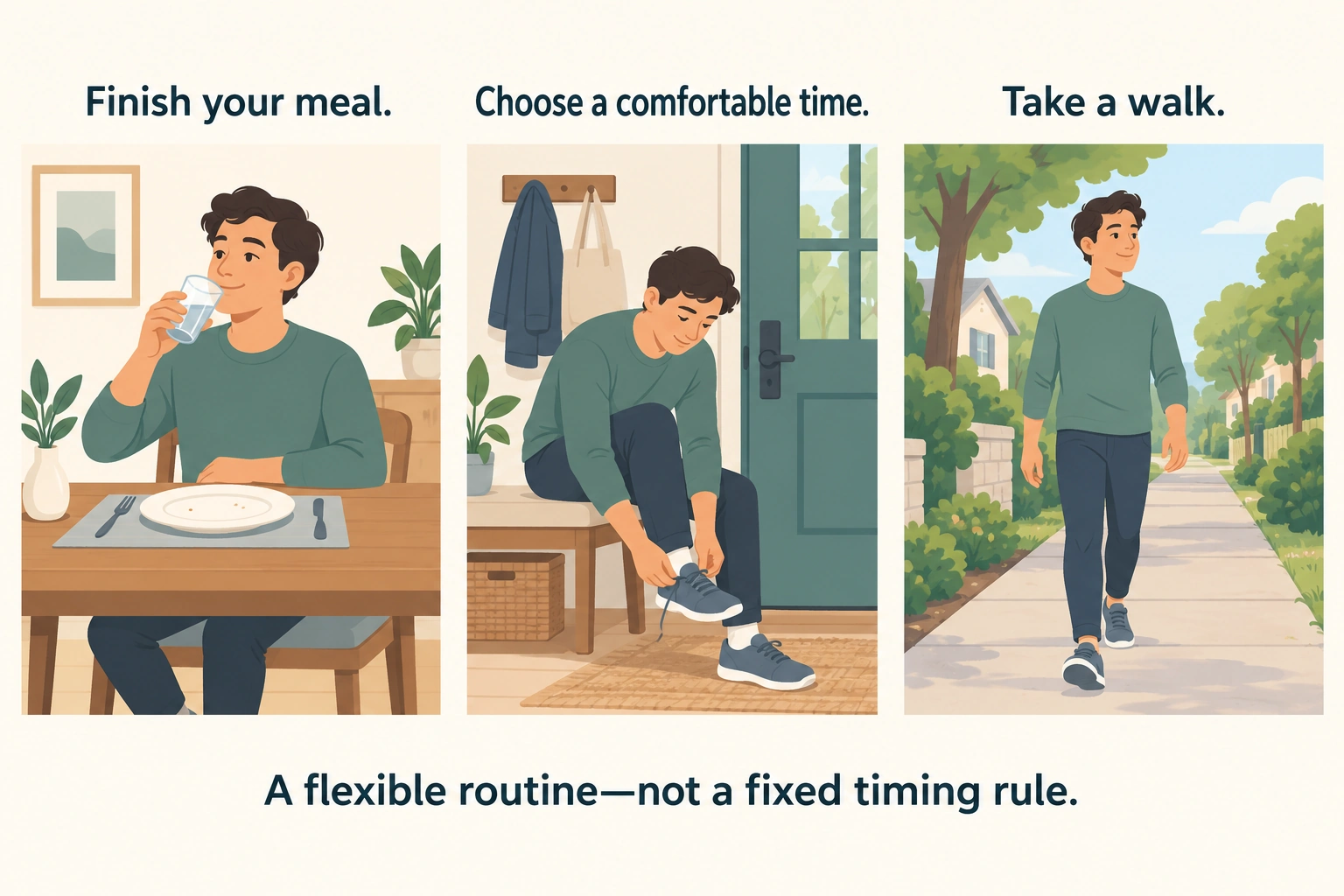
Start reasonably soon after the meal when you feel comfortable and have time. That is a practical way to place movement within the post-meal period without treating the clock as a medical rule. Studies have used different starting times, different meals, and different populations, so the evidence doesn't support a universal deadline. [1,5,9]
An immediate start is an option
A small 2025 study compared three conditions in 12 healthy young adults: a ten-minute walk immediately after a glucose drink, a 30-minute walk beginning 30 minutes later, and sitting. Both walking conditions lowered two-hour total glucose AUC compared with sitting. [5]
Only the immediate ten-minute walk significantly lowered the peak compared with sitting. However, the two walking conditions did not differ significantly from each other in peak or AUC. The study therefore did not show that ten minutes was better than thirty, or establish that the routines were equivalent. [5]
There are other reasons to avoid turning it into a universal prescription. The sample was small, the participants were young and healthy, and they drank glucose rather than eating a mixed meal. Timing and duration also changed together, making their separate effects difficult to identify. [5]
A short delay is not a missed opportunity
You may prefer to clear the table, help a child, finish a conversation, or let a large meal settle before heading out. Research has also tested walks starting 15 or 30 minutes after eating. There is no evidence-based reason to treat every short delay as a mistake. [3,7,11]
Even the phrase “30 minutes after a meal” can be ambiguous. Some protocols count from the beginning of eating; others count from the end. A leisurely dinner makes that distinction important. For everyday use, “after you finish, when comfortable” is often more helpful than an unexplained minute count.
Comfort should guide the immediate decision. An easy walk may feel fine after a small lunch but unpleasant after a much larger dinner. Shorten it, slow down, or wait rather than forcing the same routine regardless of how you feel. Persistent or severe symptoms call for assessment, not a more determined walk. [15,22]
Later exercise still counts
Some studies favor activity close to the meal for the immediate glucose response, but broader comparisons have not established one consistently superior order across outcomes. A walk later in the day still adds physical activity. A morning workout remains useful even when it doesn't overlap with lunch. [1,16,32]
The practical choice is to use an available opportunity rather than give up because an ideal one passed. Someone with a fixed work schedule might walk before lunch on one day and after dinner on another. There is no need to reorganize the entire day around a timing claim the research has not firmly established.
For people taking insulin or medicines that can cause low blood sugar, timing also needs to fit medication action, food intake, and the existing monitoring plan. That is a separate issue from finding a convenient reminder to move. Follow your treating team's instructions rather than applying a generic “walk immediately” rule. [15,25]
How long should you walk after a meal?
Ten minutes is a useful option because it has been studied and often fits into a normal day. It isn't a minimum threshold that everyone must reach. Researchers have tested a range of durations and patterns, but they haven't established a universal dose-response chart showing exactly what two, five, ten, or thirty minutes will do for an individual. [1,5,8]
Start by separating two questions: How much time is available? And how much walking feels manageable? Your first routine should fit both answers. A smaller plan that respects your schedule and capacity is a more sensible starting point than a longer one you already know is impractical.
What different durations can mean
| Walking time | A realistic use | What to keep in mind |
|---|---|---|
| 2 minutes | A short indoor loop or a first attempt at adding movement | The best-known two-minute study used repeated breaks, not one isolated walk. [4] |
| 5 minutes | A brief walk after one convenient meal | A practical starting option, not a proven minimum therapeutic dose. [8] |
| 10 minutes | A manageable break after lunch or dinner | Studied in several settings, but not a universal threshold. [2,5] |
| 15 minutes | A longer indoor or neighborhood loop | Used in small controlled trials and a longer diabetes study. [3,7] |
| 20 minutes | A comfortable outing when time and capacity allow | A dinner study found different results depending on which glucose outcome was measured. [11] |
| 30 minutes | A longer walk or part of a broader exercise routine | Useful in some studies; not consistently better for every post-meal outcome. [5,6] |
This is a menu of options, not a progression you must complete. Someone starting with two minutes doesn't have to work through every row. Someone who already enjoys a 30-minute walk doesn't need to shorten it because ten minutes is a popular headline.
One meal is enough to begin
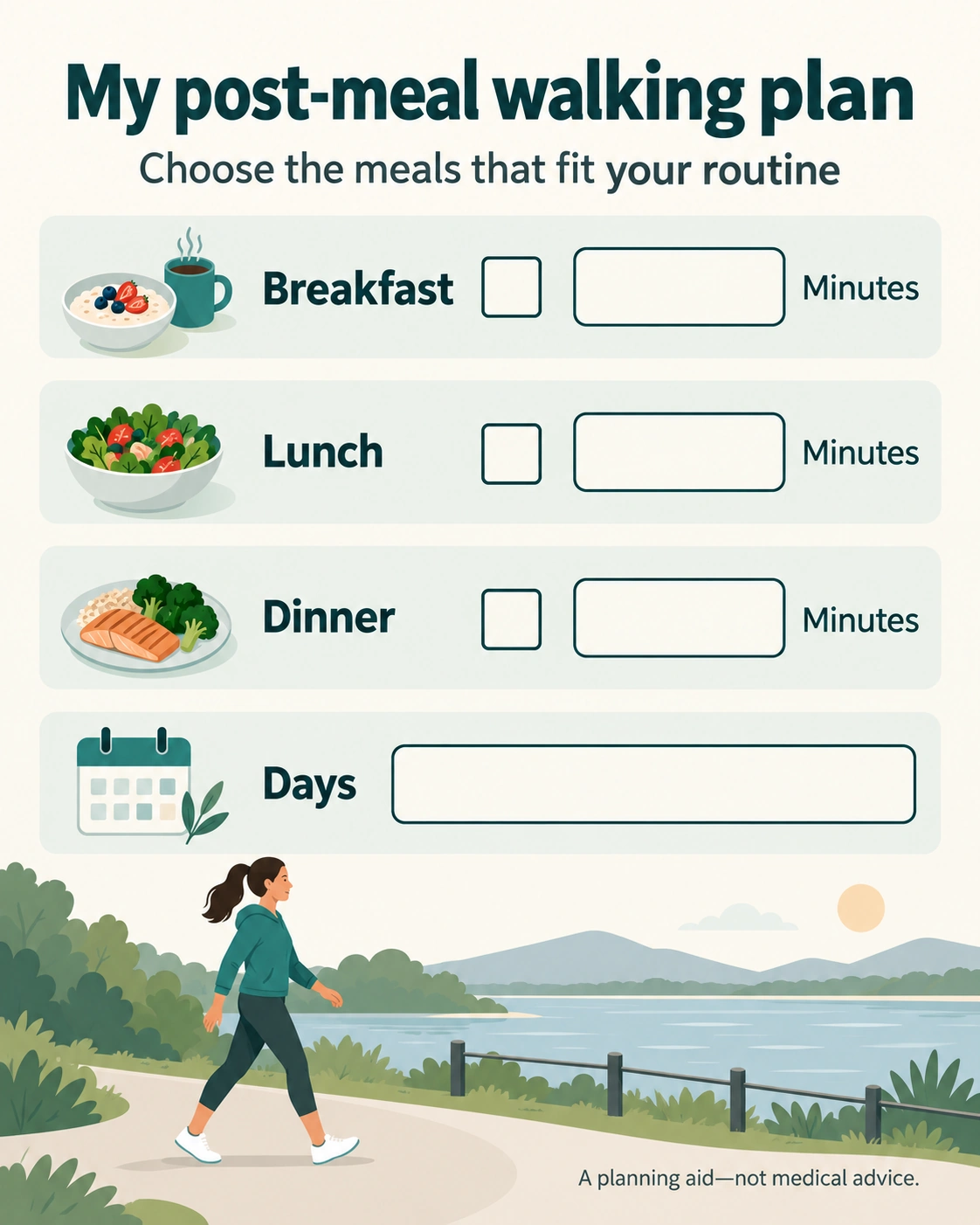
Research often uses walks after several meals to test a defined daily pattern. That doesn't mean walking after every meal is necessary before the habit has any value. Starting with one reliable opportunity lets you find out whether it suits your day without committing to a demanding schedule. [2,3]
For example, you might choose ten minutes after lunch on two workdays. That is 20 scheduled minutes for the week. It is not a daily 30-minute program, and it shouldn't be described as one. Being clear about what you actually do is more useful than borrowing the label from a much larger research protocol.
There is also no need to add sessions automatically. After a week, the right adjustment might be changing the route, choosing a different meal, or keeping the routine exactly as it is.
Available time means time you can actually use
A 20-minute lunch break does not leave 20 minutes for walking. You still need time to eat, use the restroom, and return to work. Plan from the time left after those needs, not from the full gap between appointments.
The same applies at home. A longer route may look appealing until it conflicts with caregiving or an evening commitment. Choose a loop that leaves some room for ordinary delays. A walk should fit the day, not make the rest of it feel rushed.
Some days, the best available version will be shorter. Treat that as a schedule adjustment rather than a failed workout. The research cannot predict the glucose effect of each shortened attempt, but you can still make a reasonable decision about how to spend the time you have.
How fast should you walk?
An easy, comfortable pace is a sensible default, especially when you're just getting started. Light walking has improved glucose responses in controlled studies. You don't have to breathe hard, work up a sweat, or turn the walk into a fitness test to follow the basic idea of replacing sitting with movement. [4,12]
Judge the effort, not just the speed
The same walking speed can feel easy to one person and strenuous to another. Hills, heat, fitness, balance, joint symptoms, and walking aids all affect the effort involved. A universal speed or step count would ignore those differences. [15,29]
The CDC's talk test offers a simple reference point for general aerobic exercise: at moderate intensity, you can talk but not sing comfortably. At vigorous intensity, speaking more than a few words becomes difficult without pausing for breath. A relaxed post-meal stroll may be easier than moderate activity, and that is fine. [17]
For the first few walks, focus on whether you can move steadily, turn comfortably, and finish without feeling rushed. You can choose a more purposeful pace later when it fits your goals and health needs. There is no requirement to speed up because the meal included bread, rice, or dessert.
Harder is not always better for blood sugar
Exercise intensity affects the body's fuel use and hormone responses. In some circumstances, particularly with vigorous exercise and certain diabetes situations, glucose can rise temporarily rather than fall. That doesn't make the exercise useless; it means glucose regulation is more complex than “more effort equals a lower reading.” [15,29]
Different activities also need to be described accurately. A 2026 trial of short exercise “snacks” used vigorous bodyweight movements, not gentle walking. Some secondary glucose measures improved, but the primary 48-hour mean glucose result was not statistically significant. It cannot support a promise that four minutes of strolling controls glucose all day. [10]
After a large meal, choose comfort over intensity. A shorter, slower walk may be the better option. Stop rather than push through dizziness, significant nausea, chest discomfort, or unusual breathlessness. Those symptoms deserve attention regardless of the planned distance. [22,25,27]
Before or after meals—and several short walks or one longer walk?
The most useful choice depends on what you're trying to accomplish. Reducing the immediate glucose response to lunch is not exactly the same goal as improving endurance, breaking up a sedentary workday, or spending time outdoors. One routine can serve several purposes, but no single schedule has to do everything.
Before versus after eating
A 2023 review supported post-meal exercise for the immediate glucose response. A broader 2024 meta-analysis of 28 studies did not find a consistent overall glycemic advantage for exercising before rather than after meals, or vice versa, across its analyses. These reviews differed in their included studies, outcomes, and time frames. [1,32]
That is not a contradiction to solve by picking the review with the most appealing conclusion. It means the answer changes with the question. Evidence that walking after lunch beats sitting after lunch does not establish that it is better than every form of morning exercise.
Keep a pre-meal routine that works for you. A regular morning walking group may offer a dependable exercise opportunity and welcome company. Replacing it with three inconvenient walks would not automatically improve your overall routine. A small post-lunch addition is another option.
Three short walks versus one longer walk
In a small crossover study of ten insufficiently active adults, researchers compared three ten-minute post-meal walks, one 30-minute walk after dinner, and no prescribed walking. Both walking schedules improved the post-dinner response compared with inactivity, with no significant difference between them. The small sample means the result shouldn't be treated as proof that the schedules are identical. [6]
The practical choice can therefore reflect preference as well as physiology. Some people find short breaks easier to fit between commitments. Others would rather get outside once and stay out longer. Neither preference is a failure to follow the evidence.
| Your main goal | An approach to consider | The limitation |
|---|---|---|
| Add movement during the post-meal period | A comfortable walk after a convenient meal | No universal optimal start time or duration has been established. [1,9] |
| Interrupt long stretches of sitting | Repeated brief activity breaks when feasible | One after-dinner walk is not the same as a day of sitting interruptions. [4,12] |
| Build an aerobic routine | Longer walks, shorter brisk sessions, or another suitable activity | Intensity and total activity matter, not just proximity to food. [16,17] |
| Make walking easier to schedule | Choose one longer outing or several shorter ones | Neither pattern is proven easier for everyone to maintain. [2,6] |
Count the minutes once, even when they serve two goals. A ten-minute brisk walk after lunch may contribute to your aerobic total and your post-meal routine, but it is still ten minutes—not twenty. An easy walk can be logged as walking without automatically labeling all of it moderate-intensity exercise. [17]
Breakfast, lunch, or dinner: which meal should you choose?
Dinner often gets the attention because some influential trials found a particularly favorable response after the evening meal. Those results came from specific meal and activity patterns, not a universal biological rule that dinner is always the most important time to walk. [2,3]
The 2026 review of continuous glucose monitoring studies, for example, found its clearest meal-specific pooled signal after breakfast. It included different exercise types, so that result doesn't establish a new rule that breakfast is best either. The evidence is more varied than a ranking of meals would suggest. [9]
Choose the opportunity, not just the meal label
Consider what happens before and after you eat. A small breakfast followed by an active commute is a different situation from a large lunch followed by hours at a desk. Meal composition, medication, and existing activity matter alongside the time of day. [15,29]
For a first attempt, choose the meal that gives you a genuine opening. You don't need to prove it produces your largest glucose response. The aim is to find a useful place for movement in an ordinary day.
The following examples are hypothetical schedules, not patient stories or claims about medical outcomes.
An office lunch. You have about ten minutes after eating on Tuesdays and Thursdays. A short, familiar loop near work lets you return on time. During bad weather, an indoor corridor may be more practical. On a day with no break, choose another opportunity rather than rushing lunch or leaving a responsibility uncovered.
A family dinner. A brief walk together can work when everyone is comfortable with it. Let the route and pace accommodate the people joining you rather than turning the outing into a group workout. On a busy evening, keep the social meal and skip the walk. The routine should support family life, not organize every evening around exercise.
Irregular work hours. A shift worker might use “after the meal before my main work block” as the reminder instead of breakfast, lunch, or dinner. That is a scheduling choice. It doesn't assume that research conducted during conventional daytime hours fully describes glucose regulation during night shifts.
Only one available opportunity. Someone who can walk only after breakfast can use that opening. Waiting for a theoretically better dinner window may simply mean not walking at all. Start where the schedule allows, then decide whether the routine is comfortable enough to keep.
You don't need to test every meal
A glucose monitor is not a prerequisite for an ordinary walking habit. People without a clinical reason to monitor do not need to turn breakfast, lunch, and dinner into experiments before deciding to move more. Concerns about diabetes should be addressed through appropriate testing and medical assessment, not a single sensor trace. [18,30]
People who already monitor glucose as part of diabetes care should follow their established plan. A treating team can help interpret repeated patterns alongside meals, medications, symptoms, and activity. An attractive graph after one walk is not enough to identify the best schedule or justify a medication change. [14,15]

Does walking after meals help with weight loss or belly fat?
Walking adds physical activity and uses energy. Over time, aerobic exercise can contribute to changes in weight and body fat, especially within a broader, sustainable approach. What has not been established is a special fat-loss advantage from placing those walking minutes immediately after meals. [19,20]
A large 2024 meta-analysis found that higher amounts of aerobic exercise were generally associated with greater reductions in body weight and measures of body fat. The studies examined exercise over weeks or longer. They did not show that a short, precisely timed walk guarantees weight loss or that post-meal walking is superior to the same activity at another time. [19]
A lower glucose response is not a fat-loss measurement
Blood sugar regulation and body-fat change are related aspects of metabolism, but they are not the same outcome. A walk can improve the response to a meal without producing a detectable change on the scale. A useful exercise routine can also improve fitness without being organized around food. [15,19,32]
The oversimplified story goes like this: eating raises glucose, insulin stores it all as fat, and walking stops that from happening. Real metabolism doesn't work that way. The body continually uses and stores nutrients, and muscle can draw on several fuels. A brief glucose measurement cannot tell you how body composition will change over the coming months. [13,19,30]
It follows that a smaller glucose peak should not be used as proof that a walk is “burning belly fat.” The studies reviewed here do not demonstrate selective fat loss from the abdomen because walking happened after a meal. [19,20]
Why a widely shared weight-loss paper is weak evidence
A 2011 paper suggested that walking immediately after meals might be more effective for weight loss than waiting an hour. Despite the appealing title, it described the author and one volunteer. It was not a large randomized trial. [20]
Two people's experiences cannot reliably separate the effect of walk timing relative to meals from food intake, the amount of walking, other behavior changes, or individual variation. The report raises a question worth studying; it doesn't justify a general weight-loss promise.
This is a useful example of why a published paper's title isn't enough. The design, comparison, and number of participants determine how much confidence its findings deserve.
Appetite and the rest of the day still matter
The glucose studies discussed here do not establish that a short post-meal walk reliably suppresses appetite, prevents snacking, or changes how much someone eats later. Those outcomes need to be measured directly rather than inferred from a better glucose curve. [1,2,8]
For weight management, look at the overall routine instead of trying to assign a precise effect to one walk. Nutrition, total activity, strength training, sleep, and appropriate medical support may all have a place. ZPHC's protein guide provides related context on nutrition and muscle health; it is not a reason to adopt an extreme protein target. [14,19]
Walking should not become repayment for eating. A meal does not create an exercise debt, and dessert doesn't require an extra lap. Choose movement because it fits your health goals and your life, not because food needs to be earned or canceled out.
Weight loss is also not everyone's goal. Maintaining strength, preserving mobility, enjoying an activity, or following a diabetes care plan can all be more relevant than a lower number on the scale. [14,16]
Digestion, bloating, reflux, mood, and sleep
“Walking helps digestion” sounds straightforward, but it combines several different questions. Does food leave the stomach faster? Does bloating improve? Does reflux settle? Does the person simply feel more comfortable? Evidence for one outcome doesn't answer the others.
Stomach emptying and comfort are different outcomes
A small study in ten healthy men found that walking after a meal accelerated stomach emptying compared with the water-control condition. However, it did not improve the participants' reported fullness or other digestive symptoms. Faster emptying was not the same as feeling better. [21]
That finding also doesn't establish a treatment for gastroparesis or another diagnosed digestive disorder. A healthy-volunteer experiment cannot supply an individualized plan for someone whose symptoms have a different cause. [15,21]
There is preliminary evidence for functional bloating
A 2021 randomized trial studied 94 people with diagnosed functional abdominal bloating. For four weeks, participants either followed a ten- to fifteen-minute slow-walking routine after each meal or received a medication regimen. Both groups received dietary advice. The walking group reported a greater improvement in post-meal fullness and bloating; differences in the other measured symptoms were not statistically significant. [34]
The result is promising but not definitive. This was a single-center, open-label trial based on self-reported symptoms, without an inactive comparison group. It also tested a specific walking routine rather than any casual stroll. It does not establish walking as a replacement for treatment or prove that everyone with unexplained bloating will benefit. [34]
The practical conclusion is neither “walking cures bloating” nor “there is no evidence.” An easy walk may help some people, but persistent symptoms still need an appropriate explanation.
Reflux is a separate issue
Staying upright after a meal and walking after a meal are not identical interventions. For people with reflux at night or when lying down, NIDDK notes that finishing meals at least three hours before lying down or going to bed may help. That advice concerns meal timing and position, not a proven cure from walking. [23]
A gentle stroll may be a comfortable way to spend some upright time. It isn't a reason to ignore recurring symptoms or force vigorous activity after a large meal. Difficulty swallowing, persistent vomiting, signs of gastrointestinal bleeding, or unexplained weight loss warrant medical assessment. Chest discomfort with warning signs of a heart attack needs emergency attention, even when it starts after eating. [22,27]
The evidence discussed here also doesn't establish a specific post-meal walking prescription for constipation. Ongoing changes in bowel habits deserve their own assessment rather than a generic instruction to walk longer.
Mood and a break from the day
Physical activity has broader mental health benefits. Some benefits can occur after a single session of moderate-to-vigorous activity, but that evidence doesn't prove that every easy ten-minute walk after dinner immediately improves mood or treats anxiety. The timing of a walk relative to a meal is not the established reason for those broader effects. [24]
You can still choose a walk for ordinary reasons: a quiet break from work, a conversation, or a few minutes away from a screen. Those experiences don't need a hormone explanation to be worthwhile. Nor do you need to feel noticeably better after every walk for it to remain a reasonable activity choice.
Sleep
Regular physical activity can support sleep, but post-dinner walking has not been established by the studies in this guide as a unique treatment for insomnia. An evening walk may fit a relaxing routine; someone else may prefer activity earlier in the day. [16,24]
Keep the practical question simple: does it fit the evening without causing discomfort or delaying bedtime? A later walk isn't automatically better because it happens closer to sleep. Persistent sleep problems deserve attention in their own right.
Prediabetes, type 2 diabetes, and medication
For people with prediabetes or type 2 diabetes, post-meal walking can be one part of an activity plan. It works alongside nutrition, prescribed treatment, and other aspects of care—not in place of them. The appropriate routine depends on the person's health, medications, physical capacity, and goals. [14,15]
Prediabetes: think beyond one habit
Evidence for preventing or delaying type 2 diabetes comes from broader programs that combine sustained lifestyle changes and support. It does not establish that one specific post-meal walking schedule independently prevents diabetes. A short walk can help someone build the activity portion of a larger plan, but its contribution should not be confused with the effect of the entire program. [31]
Someone with prediabetes may benefit from discussing a structured prevention program rather than simply trying to time walks more precisely. Someone worried about having diabetes needs appropriate testing. Exercise should support medical care, not become a way to postpone finding out what is wrong. [18,30,31]
Type 2 diabetes: directly relevant evidence, but not one-size-fits-all advice
Several walking trials included people with type 2 diabetes, so the evidence is not based entirely on healthy volunteers. However, participants differed in medication use, diabetes duration, glucose control, and activity level. A finding in people who do not use insulin cannot settle the safety or expected benefit for someone who does. [2,10,12]
Longer-term evidence is limited, but it isn't absent. A 2017 crossover study of 64 adults with type 2 diabetes compared three 15-minute post-meal walks with a 45-minute pre-breakfast walk, with each condition lasting 60 days. The researchers reported better glucose measures and A1C with the post-meal schedule. [7]
The study had no washout between conditions, which complicates interpretation, particularly because A1C reflects a period extending beyond a single day's activity. It is encouraging evidence, not sufficient proof that this schedule reliably outperforms other routines over the long term. [7,18]
The medicines that make low blood sugar a particular concern
Insulin, sulfonylureas, and meglitinides can cause hypoglycemia, meaning blood glucose falls too low. Physical activity can increase that risk during or after exercise. Food intake, recent activity, illness, and other circumstances can also affect it. [25]
Not all diabetes medicines carry the same risk. Metformin used alone generally has a much lower risk of causing hypoglycemia than insulin or medicines that stimulate insulin release. Combinations and individual circumstances matter, so “I take a diabetes medication” is not enough information to determine the right exercise precautions. [15,29]
People at risk should follow their existing instructions for monitoring, recognizing and treating lows, and carrying recommended supplies. Don't change medication doses or food intake based on a general walking article. A useful question for your treating team is: “How should a walk after meals fit my current glucose-management plan?” [14,25]
A better reading after a walk also isn't permission to stop a prescription. Changes in treatment belong with the clinician who can review the full pattern, not one successful session. [14,15]
A note on GLP-1 medicines
GLP-1 medicines don't remove the value of physical activity, but side effects and other treatments can affect how a walk fits. The current semaglutide labeling warns about gastrointestinal symptoms, dehydration associated with those symptoms, and increased hypoglycemia risk with certain treatment combinations, including insulin or insulin-releasing medicines. That is drug-specific information, not a claim that every GLP-1 medicine has identical risks. [26]
Don't force a walk through significant nausea, vomiting, dizziness, or poor fluid intake. Persistent or severe symptoms need advice from the prescribing team, not an effort to “walk them off.” Follow the instructions for the medicine actually prescribed to you. [26]
ZPHC's guide to GLP-1 medicines, nutrition, and muscle preservation discusses the broader context. The decision to add an ordinary walk is separate from any decision to start, stop, or change medication.
When individualized guidance is essential
Type 1 diabetes, diabetes during pregnancy, recurrent severe hypoglycemia, significant complications, and complex treatment regimens need individualized activity advice. This doesn't mean exercise is unsuitable. It means a general article cannot supply the necessary medication, monitoring, and safety detail. [14,15,29]
The goal is to make activity more manageable within care—not to create another rule that overrides it.
Make the habit work indoors, at work, and with mobility limitations
A walking recommendation is only useful when it accounts for real life. Safe sidewalks, flexible lunch breaks, mild weather, and pain-free walking are not available to everyone. Begin with the setting and capacity you actually have rather than treating every obstacle as a motivation problem.
Indoor walking is a legitimate option
You don't need to be outdoors for walking to affect glucose. Several studies used treadmills or supervised indoor routes. The location itself is not what makes muscle contraction useful. That doesn't mean every household task is equivalent to a studied walking protocol, but it removes the need for a particular outdoor setting. [3–6]
A clear hallway, a loop through connected rooms, or an accessible corridor can be enough space for a short routine. Choose predictable footing and enough room to turn comfortably. Keep frequently used paths free of obstacles, including loose items, cords, and anything that could interfere with a walking aid.
A treadmill or walking pad is optional, not a requirement. Before considering equipment, ask whether an existing route would meet the same practical need. Cost, space, balance, and safe operation matter more than whether a device is marketed for post-meal walking.
Weather should change the plan when necessary
Heat, ice, storms, poor air quality, and darkness can make an outdoor route unsuitable. An indoor option, a different time, or a skipped session can be the better choice. People with conditions that require environmental precautions should follow those instructions. In particular, diabetes-related complications and some medications can affect tolerance of heat and activity. [15,29]
Don't choose a route that requires unsafe traffic crossings or leaves you far from a place to stop. A shorter familiar loop may be more practical than a longer route with no easy return. Timing a walk around a meal is not more important than the conditions outside.
Work and caregiving are real constraints
Some jobs offer flexible breaks; others do not. A teacher, driver, healthcare worker, or person staffing a service desk may not be able to leave immediately after eating. Use a genuinely available interval, choose another meal, or discuss a permitted break arrangement. Don't skip food to create walking time.
Caregiving can make leaving the house difficult even when a calendar looks open. An indoor option may help, but it still needs to fit supervision and safety responsibilities. A short walk with someone else may work on one day and be impossible on another.
Allow the schedule to reflect those differences. Tuesday lunch and Saturday dinner don't need matching routes, durations, or start times to be part of the same general habit. A flexible plan is not a lesser version of a perfect one; it is a plan built for a variable week.
Joint symptoms and limited walking capacity
Choose a level route, a shorter distance, or a nearby resting place when that better matches your capacity. Keep prescribed walking aids available and follow existing rehabilitation or weight-bearing restrictions. Increasing pain is a reason to change the activity, not something to endure for a presumed glucose benefit. [15,29]
Someone who is uncomfortable after a few minutes needs a suitable starting point, not an automatic 20-minute target. A physical therapist or another appropriate clinician can help adapt activity when pain, a recent injury, falls risk, or a change in mobility makes generic advice inadequate.
Other movement can be useful without being identical
Standing, chair-based exercise, cycling, resistance exercises, wheelchair propulsion, and walking are different activities. They should not be assigned the same glucose effect minute for minute. Research does support some nonwalking activity breaks, but the specific intervention and the person's abilities matter. [12,14]
Someone who cannot walk should not be left with the impression that useful activity is unavailable. The question becomes which accessible movement supports their goals and is suitable for them. General activity guidance includes people living with disability and encourages activity appropriate to ability. [16]
An alternative does not need to replicate a walking trial exactly to have a place in a broader activity plan.
How post-meal walking fits into your broader activity routine
A short walk can add movement and interrupt sitting without covering every part of fitness. Strength, balance, aerobic endurance, and sport-specific performance involve different demands. Treat post-meal walking as one useful component rather than a complete exercise program. [14–16]
WHO guidance recommends 150–300 minutes of moderate-intensity aerobic activity per week, 75–150 minutes of vigorous activity, or an equivalent combination for adults. It also recommends muscle-strengthening activity involving the major muscle groups on at least two days a week. Older adults should include multicomponent activity emphasizing balance and strength on at least three days a week. These are population-level goals, not instructions to reach every target immediately. [16]
Count activity honestly
Ten minutes of easy strolling is ten minutes of walking. Whether it also qualifies as moderate-intensity aerobic activity depends on the effort. A relaxed post-meal route can serve one purpose, while a separate brisk walk, swim, or other suitable activity serves an aerobic training goal. [17]
Short activity bouts can contribute to the broader routine; there is no reason to dismiss movement simply because it doesn't last half an hour. But being brief and being moderate in intensity are different issues. The goal is an accurate picture of what you're doing, not making every minute fit the same label. [16,17]
Keep strength and balance in the plan
Walking uses muscles, but it doesn't replace a well-designed resistance-training program. Strength work has a separate role in general and diabetes activity guidance. For older adults, balance and functional ability also deserve attention. Simply adding more walking time doesn't automatically address every need. [14,16]
Preserve the activities that already serve those purposes. Adding a short lunch walk doesn't require removing a strength session, and adding meal-timed walks shouldn't crowd out needed recovery.
Think about sitting throughout the day
The 2026 American Diabetes Association Standards recommend interrupting prolonged sitting at least every 30 minutes with standing, walking, or other light activity. This is a broader approach to sedentary time, not a claim that each option produces an identical glucose response. [14]
A single dinner walk also doesn't reproduce regular breaks during a seated workday. Where feasible, use natural opportunities to move: the end of a task, a permitted break, or the interval between meetings. The specific reminder is a planning tool, not a scientifically validated timing formula.
An activity routine should remain manageable during ordinary variations in energy, work, and health. More scheduled exercise is not automatically a better plan when it displaces sleep, aggravates symptoms, or removes activities you value.
A practical starting plan for five, ten, or twenty minutes
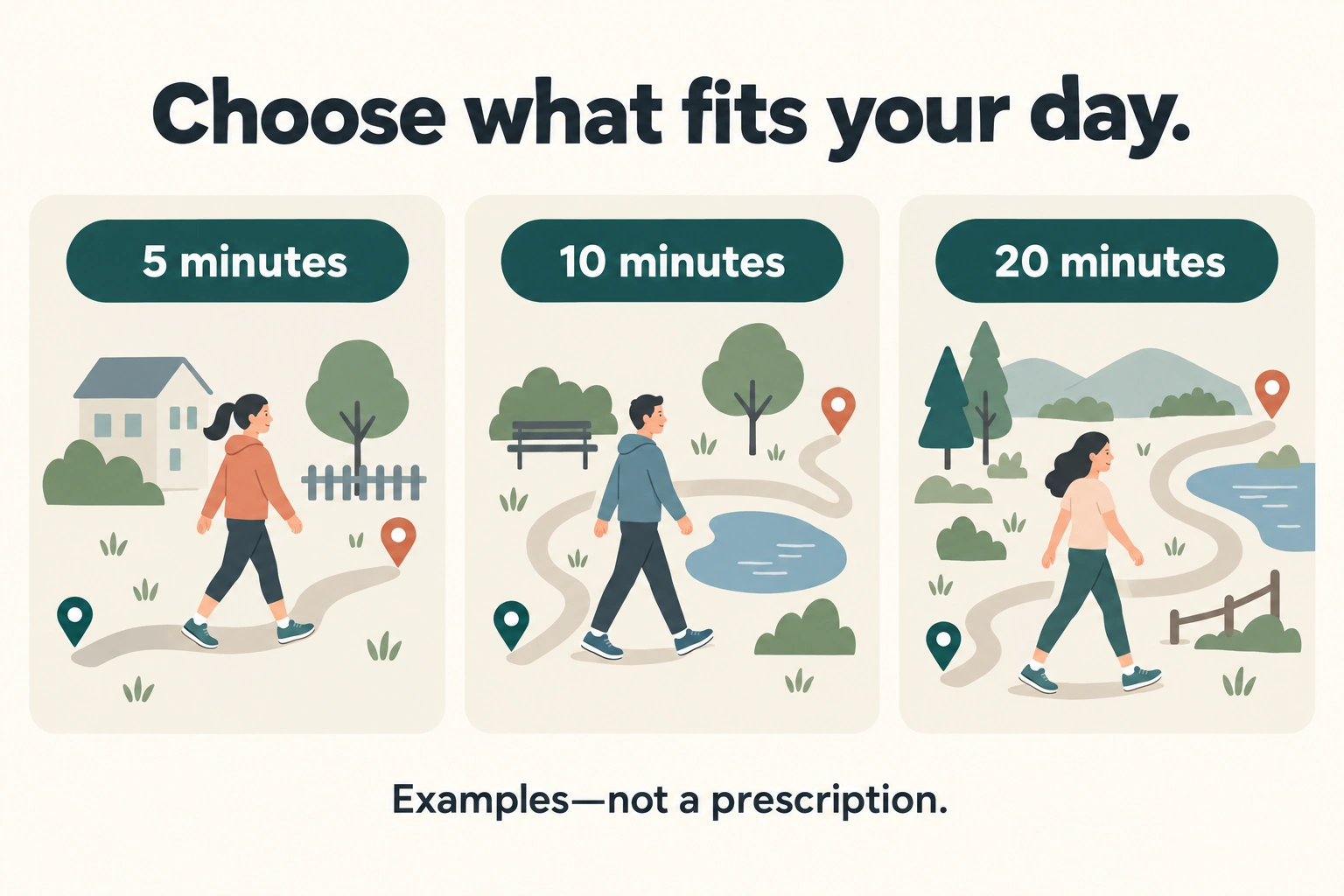
The examples below are scheduling options for generally well adults who can walk comfortably. They are not validated treatment protocols or predictions of glucose improvement. Existing medical or rehabilitation advice takes priority.
Begin with three decisions: which meal offers a real opportunity, how much time you can spare, and where you can move safely. You don't need a glucose reading, a weight measurement, or a new device to answer those questions.
When you have five minutes
Choose one familiar loop and walk at an easy pace for up to five minutes. Stay close enough to stop or return sooner. Indoors is fine. Don't turn a short interval into a speed challenge by trying to cover a predetermined distance.
For a first week, you might choose lunch on Monday, Wednesday, and Friday. Three five-minute sessions total 15 scheduled minutes. On a busy day, shorten the walk or skip it. The point is to test whether the time and route work, not to protect a streak.
A smaller starting version is appropriate when five minutes is too much. Choose a shorter comfortable duration, or get help adapting the activity when symptoms or mobility limitations are the barrier.
When you have ten minutes
Choose a route with a predictable return. One option is two easy minutes, six minutes at a comfortable steady pace, and two easy minutes to finish. That adds up to ten minutes; the middle portion doesn't have to be brisk.
For example, doing this after lunch on Tuesday and Thursday schedules 20 minutes for the week. Keep a shorter route available for days when a full ten minutes no longer fits.
Record what you actually do rather than automatically counting the planned duration. That makes the schedule useful for understanding your week instead of turning it into a list of intentions.
When you have twenty minutes
Someone already comfortable with a 20-minute walk might use three easy minutes, fourteen comfortable steady minutes, and three easy minutes to finish. Another option is to choose two separate ten-minute walks at available times. These are different schedules, not proven equivalent treatments for glucose.
A weekend example would be twenty minutes after Saturday lunch and twenty after Sunday lunch, for 40 scheduled minutes. There is no requirement to add weekday walks or to use every available minute. Choosing ten minutes when you have twenty is still a reasonable decision.
A flexible two-week start
| Period | Illustrative schedule | Scheduled walking |
|---|---|---|
| Week 1 | Five minutes after one selected meal on Monday, Wednesday, and Friday | 15 minutes |
| Week 2: repeat | Keep the same three five-minute sessions | 15 minutes |
| Week 2: optional adjustment | When comfortable and practical, choose seven minutes on those same days instead | 21 minutes |
The two week-two rows are alternatives, not instructions to do both. Repeating the original schedule gives 30 minutes across the two weeks. Choosing the seven-minute option in week two gives 36 minutes. Unselected days add no scheduled minutes.
At the end of the first week, ask what needs adjusting. Was the meal convenient? Did the route feel comfortable? Did walking interfere with work, caregiving, eating, or rest? The useful change may be choosing another meal rather than increasing the duration.
Keep the routine unchanged when it works. Increase it only when doing so fits your capacity and preferences. There is no requirement to keep escalating beyond the two-week example.
What to do when life gets in the way
A missed walk doesn't create a debt. Resume at the next workable opportunity rather than doubling the next session or changing what you eat to compensate.
During illness, worsening symptoms, or a change in medical advice, pause and reassess. When the obstacle is scheduling, make the plan smaller or move it. A useful routine is one you can adapt without turning every disruption into a failure.
Safety: when to adjust, stop, or get help
An otherwise well adult doesn't automatically need medical clearance before an ordinary easy walk. But new symptoms, significant complications, or existing activity restrictions change the situation. Use the advice relevant to your health rather than treating a generic schedule as permission to ignore warning signs. [15,29]
Symptoms that need emergency attention
Stop activity and call your local emergency number for chest pressure or pain that may signal a heart attack, especially with shortness of breath, cold sweating, faintness, or pain spreading to the arm, back, neck, or jaw. Do not keep walking to see whether it passes or assume it is indigestion because it followed a meal. [27]
Severe confusion, collapse, seizures, or an inability to swallow safely also require urgent help. In someone with diabetes, these can be signs of severe hypoglycemia. Follow the established emergency plan. Do not give food or drink to someone who cannot swallow safely. [25]
Suspected low blood sugar
Stop and follow your clinician-provided treatment and monitoring instructions. Walking is not a treatment for a suspected low. Glucose can also be affected after activity ends, so follow any advice about later checks. [15,25]
A high reading is not a general instruction to exercise until it comes down either. Follow your diabetes plan, particularly when you are ill or have concerning symptoms. This article does not provide a glucose-based exercise or medication-adjustment algorithm. [15,29]
Foot problems, pain, and illness
People with diabetes-related loss of sensation may not feel a blister or wound as clearly as expected. Appropriate footwear and regular foot checks matter. New sores, redness, swelling, or signs of infection need prompt advice rather than additional walking on the affected foot. [28]
New or worsening pain, repeated dizziness, unusual breathlessness, or a change in walking ability deserves assessment. Significant vomiting, diarrhea, or poor fluid intake can also make a planned walk inappropriate, especially when medication-specific precautions apply. [15,26]
Ordinary safety decisions count too. Change the route, move indoors, or skip the session when the environment is unsafe. A timer is not a reason to walk on ice, ignore an obstacle, or continue without a needed aid.
Myth check
| Claim | What the evidence actually supports |
|---|---|
| “One two-minute walk is all anyone needs.” | Repeated-break trials do not establish the effect of one isolated walk. [4,8] |
| “Ten minutes immediately after eating beats every longer walk.” | The timing studies do not support that universal conclusion. [5,32] |
| “Dinner is always the best meal to walk after.” | Results differ across populations, protocols, and outcomes. [3,9] |
| “A smaller glucose peak means belly fat is disappearing.” | A glucose response is not a measurement of fat loss. [19,20] |
| “Walking cures bloating.” | One trial is promising for functional bloating, but it doesn't establish a cure or treatment replacement. [34] |
| “A short walk replaces medication and the rest of exercise.” | Walking belongs within a broader activity and healthcare plan. [14,15] |
Frequently asked questions
1. Can I walk immediately after eating?
An easy walk is a reasonable option when you feel comfortable. There is no universal waiting requirement, but there is also no need to start immediately. Symptoms, medication considerations, and existing activity restrictions matter more than following an exact minute count. [5,15]
2. What is the best time to walk after a meal?
No single starting time has been established for everyone. Walking reasonably soon after eating is a practical choice, but studies use different timing definitions and outcomes. Choose a comfortable interval that fits your day and, when relevant, your diabetes care plan. [1,9,25]
3. Is a two-minute walk worth doing?
It can be a manageable way to begin adding movement. Just don't assume it reproduces the results of studies using two-minute breaks repeatedly throughout several hours. Those studies tested the accumulated pattern, not one isolated walk. [4]
4. Do I have to walk for at least ten minutes?
No universal ten-minute threshold has been established for post-meal glucose benefits. Ten minutes is a studied and practical option, not a pass-or-fail requirement. Choose a shorter duration when that better fits your capacity or schedule. [5,8]
5. Should I walk after every meal?
Not necessarily. Start with one convenient opportunity. Studies using several daily walks do not mean everyone needs that schedule. Add another session only when it is appropriate and useful for you, rather than because a meal automatically requires exercise. [2,3]
6. Does walking around the house count?
Walking doesn't need to happen outdoors. Indoor walking is part of several research protocols. Choose a clear, safe route with comfortable turns. You don't need a particular destination, treadmill, or step target to begin an ordinary walking habit. [3–5]
7. Is marching in place the same as walking?
Not necessarily. It provides movement, but the studies in this guide don't establish that it produces the same glucose effects as the walking routines tested. Balance, comfort, and physical capacity matter when choosing any alternative. [12,15]
8. Can I stand instead of walking?
Standing can interrupt sitting, but it should not be assumed to produce the same glucose response as walking. Current diabetes guidance includes several ways to break up sedentary time; their effects and suitability are not identical. [8,14]
9. Is walking before a meal a bad choice?
No. A broader review did not find a consistent overall glycemic advantage for one order across its analyses. Keep a pre-meal routine that works for you rather than treating its timing as a problem. [32]
10. Should I replace my long walk with several short walks?
There is no universal reason to do so. Direct comparisons are limited, and both patterns can be useful. Choose the arrangement that fits your goals and schedule. Keeping a longer walk and adding a short lunch break is another option. [3,6]
11. Will walking after dinner reduce belly fat?
It can contribute to overall physical activity, but a special or selective belly-fat effect from timing walks around meals has not been demonstrated. Changes in a glucose curve should not be interpreted as evidence that abdominal fat is being lost. [19,20]
12. Can post-meal walking lower A1C?
An appropriate activity routine can support diabetes management. Evidence that the timing of walks around meals itself reliably improves A1C beyond other schedules is more limited. Studies measuring glucose for a few hours cannot answer a question about a marker reflecting roughly three months. [7,14,18,32]
13. Do I need a continuous glucose monitor?
Not simply to start walking more. People already using monitoring should follow their care plan. Concerns about diabetes call for appropriate clinical assessment, not a diagnosis based on one sensor response to a meal or a walk. [18,30]
14. What should I know if I take insulin?
Activity can increase the risk of low blood sugar during or after exercise. Follow your individualized instructions about timing, monitoring, supplies, and treating lows. Don't change insulin or food intake on the basis of this article. [15,25]
15. Is walking appropriate while taking a GLP-1 medicine?
It may fit your activity plan, but symptoms, other medicines, and prescribing instructions matter. Don't force a walk through significant nausea, vomiting, or dizziness. Hypoglycemia risk also differs across treatment combinations. [26]
16. Can walking after eating help bloating?
Possibly. A small randomized trial found promising symptom improvements in people with functional abdominal bloating. The evidence is limited and doesn't establish a cure. Persistent, worsening, or unexplained symptoms still deserve assessment. [22,34]
17. Do I need a post-meal walk on a rest day?
No. An easy walk can be optional activity, not another compulsory workout. Choose what fits your recovery and comfort, and keep any medical or rehabilitation restrictions in place. Rest does not create an obligation to compensate later. [15,29]
18. What happens when I miss a day?
Resume at the next convenient opportunity. You don't need to double the next session, change a meal, or start over. Repeated scheduling problems are a reason to revise the plan—not a reason to judge yourself more harshly.
A useful habit, without the rigid rules
Walking after meals can improve the immediate blood sugar response compared with staying seated. That is a worthwhile finding on its own. It doesn't need to become a promise of weight loss, a cure for digestive symptoms, or a rule that every meal must be followed by exercise. [1,8,19,34]
For a generally well adult, a comfortable short walk after one convenient meal is a sensible starting option. Use the time and setting available, keep other useful activities in your routine, and adjust when circumstances change. Medication risks, persistent symptoms, and mobility limitations call for individualized guidance rather than stricter timing. [15,25]
The goal is to make movement easier to include in daily life—not to turn eating into another task you have to get exactly right.
References
- Engeroff T, Groneberg DA, Wilke J. After Dinner Rest a While, After Supper Walk a Mile? A Systematic Review with Meta-analysis on the Acute Postprandial Glycemic Response to Exercise Before and After Meal Ingestion in Healthy Subjects and Patients with Impaired Glucose Tolerance. Sports Medicine. 2023;53:849–869. DOI
- Reynolds AN, Mann JI, Williams S, Venn BJ. Advice to walk after meals is more effective for lowering postprandial glycaemia in type 2 diabetes mellitus than advice that does not specify timing: a randomised crossover study. Diabetologia. 2016;59:2572–2578. DOI
- DiPietro L, Gribok A, Stevens MS, Hamm LF, Rumpler W. Three 15-min Bouts of Moderate Postmeal Walking Significantly Improves 24-h Glycemic Control in Older People at Risk for Impaired Glucose Tolerance. Diabetes Care. 2013;36:3262–3268. PubMed
- Dunstan DW, Kingwell BA, Larsen R, et al. Breaking Up Prolonged Sitting Reduces Postprandial Glucose and Insulin Responses. Diabetes Care. 2012;35:976–983. DOI
- Hashimoto K, Dora K, Murakami Y, et al. Positive impact of a 10-min walk immediately after glucose intake on postprandial glucose levels. Scientific Reports. 2025;15:22662. DOI
- Shambrook P, Kingsley MI, Taylor NF, et al. A comparison of acute glycaemic responses to accumulated or single bout walking exercise in apparently healthy, insufficiently active adults. Journal of Science and Medicine in Sport. 2020;23:902–907. DOI
- Pahra D, Sharma N, Ghai S, Hajela A, Bhansali S, Bhansali A. Impact of post-meal and one-time daily exercise in patient with type 2 diabetes mellitus: a randomized crossover study. Diabetology & Metabolic Syndrome. 2017;9:64. DOI
- Gong J, Tan L, Wang Y, Yan J, Li Y. Effects of short-bout accumulated exercise on postprandial metabolism in adults: A systematic review and meta-analysis. Complementary Therapies in Medicine. 2026;101:103416. Published online August 12, 2026; assigned to the October 2026 issue. DOI
- Lazić A, Trajković N. Effect of acute postprandial exercise on continuous glucose monitoring outcomes in type 2 diabetes: A systematic review and meta-analysis of crossover trials. Reviews in Endocrine and Metabolic Disorders. Published online July 20, 2026. DOI
- Babir FJ, Marcotte-Chénard A, Sandilands RE, et al. Exercise snacks performed in real-world settings reduce postprandial hyperglycaemia and glycaemic variability in individuals living with type 2 diabetes: a randomised crossover study. Diabetologia. 2026;69:2200–2211. DOI
- Colberg SR, Zarrabi L, Bennington L, et al. Postprandial walking is better for lowering the glycemic effect of dinner than pre-dinner exercise in type 2 diabetic individuals. Journal of the American Medical Directors Association. 2009;10:394–397. DOI
- Dempsey PC, Larsen RN, Sethi P, et al. Benefits for Type 2 Diabetes of Interrupting Prolonged Sitting With Brief Bouts of Light Walking or Simple Resistance Activities. Diabetes Care. 2016;39:964–972. DOI
- Sylow L, Kleinert M, Richter EA, Jensen TE. Exercise-stimulated glucose uptake — regulation and implications for glycaemic control. Nature Reviews Endocrinology. 2017;13:133–148. DOI
- American Diabetes Association Professional Practice Committee for Diabetes. 5. Facilitating Positive Health Behaviors and Well-being to Improve Health Outcomes: Standards of Care in Diabetes—2026. Diabetes Care. 2026;49(Suppl 1). DOI
- Kanaley JA, Colberg SR, Corcoran MH, et al. Exercise/Physical Activity in Individuals with Type 2 Diabetes: A Consensus Statement from the American College of Sports Medicine. Medicine & Science in Sports & Exercise. 2022;54:353–368. DOI
- Bull FC, Al-Ansari SS, Biddle S, et al. World Health Organization 2020 guidelines on physical activity and sedentary behaviour. British Journal of Sports Medicine. 2020;54:1451–1462. DOI
- Centers for Disease Control and Prevention. How to Measure Physical Activity Intensity. 2025. Accessed September 18, 2026. Official source
- National Institute of Diabetes and Digestive and Kidney Diseases. The A1C Test & Diabetes. Last reviewed April 2018. Accessed September 18, 2026. Official source
- Jayedi A, Soltani S, Emadi A, Zargar MS, Najafi A. Aerobic Exercise and Weight Loss in Adults: A Systematic Review and Dose-Response Meta-Analysis. JAMA Network Open. 2024;7:e2452185. DOI
- Hijikata Y, Yamada S. Walking just after a meal seems to be more effective for weight loss than waiting for one hour to walk after a meal. International Journal of General Medicine. 2011;4:447–450. DOI
- Franke A, Harder H, Orth AK, Zitzmann S, Singer MV. Postprandial Walking but not Consumption of Alcoholic Digestifs or Espresso Accelerates Gastric Emptying in Healthy Volunteers. Journal of Gastrointestinal and Liver Diseases. 2008;17:27–31. PubMed
- National Institute of Diabetes and Digestive and Kidney Diseases. Symptoms & Causes of GER & GERD. Last reviewed July 2020. Accessed September 18, 2026. Official source
- National Institute of Diabetes and Digestive and Kidney Diseases. Eating, Diet, & Nutrition for GER & GERD. Last reviewed July 2020. Accessed September 18, 2026. Official source
- Centers for Disease Control and Prevention. Benefits of Physical Activity. 2025. Accessed September 18, 2026. Official source
- National Institute of Diabetes and Digestive and Kidney Diseases. Low Blood Glucose (Hypoglycemia). Last reviewed July 2021. Accessed September 18, 2026. Official source
- Novo Nordisk; DailyMed, U.S. National Library of Medicine. WEGOVY—semaglutide injection, solution; WEGOVY—semaglutide tablet. Prescribing information; DailyMed record updated June 18, 2026. Accessed September 18, 2026. Official source
- American Heart Association. Warning Signs of a Heart Attack. Last reviewed December 12, 2024. Accessed September 18, 2026. Official source
- Centers for Disease Control and Prevention. Your Feet and Diabetes. 2024. Accessed September 18, 2026. Official source
- Colberg SR, Sigal RJ, Yardley JE, et al. Physical Activity/Exercise and Diabetes: A Position Statement of the American Diabetes Association. Diabetes Care. 2016;39:2065–2079. DOI
- National Institute of Diabetes and Digestive and Kidney Diseases. Insulin Resistance & Prediabetes. Last reviewed March 2025. Accessed September 18, 2026. Official source
- American Diabetes Association Professional Practice Committee for Diabetes. 3. Prevention or Delay of Diabetes and Associated Comorbidities: Standards of Care in Diabetes—2026. Diabetes Care. 2026;49(Suppl 1). DOI
- Slebe R, Wenker E, Schoonmade LJ, et al. The effect of preprandial versus postprandial physical activity on glycaemia: Meta-analysis of human intervention studies. Diabetes Research and Clinical Practice. 2024;210:111638. DOI
- Brian MS, Chaudhry BA, D'Amelio M, et al. Post-meal exercise under ecological conditions improves post-prandial glucose levels but not 24-hour glucose control. Journal of Sports Sciences. 2024;42(8). DOI
- Hosseini-Asl MK, Taherifard E, Mousavi MR. The effect of a short-term physical activity after meals on gastrointestinal symptoms in individuals with functional abdominal bloating: a randomized clinical trial. Gastroenterology and Hepatology from Bed to Bench. 2021;14(1):59–66. DOI